The Lasting Impact of Virtual Court
Courts rapidly adopted technology at the pandemic’s start. Now they have the opportunity to combine remote and in-person proceedings and services to best serve justice and the public.

Courts rapidly adopted technology at the pandemic’s start. Now they have the opportunity to combine remote and in-person proceedings and services to best serve justice and the public.

2026 is shaping up to be a pivotal year for courts and justice systems. Read about the top trends we anticipate to see this year as technology and court processes continue to evolve.

In an era where seeing is no longer believing, the justice system faces a major challenge: how to uphold truth when AI-generated deepfakes can distort reality. Learn more about this ongoing battle in the justice space and what is potentially to come.

On this episode of ‘Scaling Justice’, equivant Court’s Director of Marketing, Brendan Hughes, tackles the growing phenomenon of deepfakes and how it will impact the justice system, specifically with evidence integrity. He sat down with
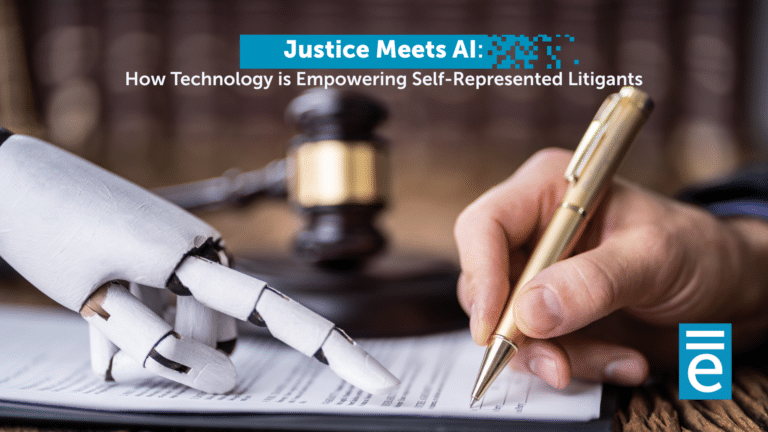
In courtrooms across the country, a quiet revolution is underway. As legal systems wrestle with the rising number of individuals navigating the justice system without legal representation, artificial intelligence (AI) is emerging as a powerful

We’ve all encountered AI in some capacity, and it’s becoming increasingly integrated into our lives. However, there’s still confusion about what AI truly entails. In this post, we’ll discuss the reasons behind this confusion, the various types of AI, its current applications in the justice industry, and how to prepare for its future impact.

In this webinar, Sherry-Lynn Agcanas-Wolf explores practical approaches to gradually adopt AI while staying mindful of its ethical and operational implications. Get actionable steps you can take in both the short and long term to prepare your court for future advancements in AI.

As we move into 2025, the justice industry will transform significantly due to artificial intelligence (AI), improving access to justice, data governance, and virtual services. While challenges related to security, privacy, and ethics remain, there is a growing demand for AI and cloud-based systems. Read these seven upcoming trends in the justice system.
Whether you’re just starting to explore AI in the justice space or looking to streamline your current processes, this guide will provide the knowledge and resources you need to move forward with confidence.

In this episode of Scaling Justice, Brendan Hughes sits down with Stuart Rosove, General Manager of equivant Court, to discuss the truth about cloud/app-based technology and AI, and what court leaders need to know to modernize their court.

The judicial system is on the brink of a technological revolution. Traditional client-server and web-based (thin client) enterprise systems are rapidly losing favor among court employees, paving the way for cloud and app-based enterprise solutions.

While artificial intelligence (AI) has been around for a while, it made a big splash in 2023. There are many components of AI, and the implications for the legal industry are huge. As AI continues to evolve, we expect to see more courts exploring what AI means for them specifically and determining the measurable gains of its use. In addition, we expect courts to explore some of the hot topics related to court privacy, cyber security, and deep fakes as they pertain to AI.